

Sponsor code Mobile no Tax ID code
Blog navigation

Latest posts

Water retention in the legs: How to drain and deflate
91 views

Persistent bloating, a feeling of heaviness that is accentuated towards the evening and tissues that appear visibly...

Read more
How to eliminate excess fluids from the body?
59 views

Fighting the accumulation of excess fluid requires a holistic approach, integrating a healthy lifestyle, a conscious...

Read more
Skin and hair at the beginning of pregnancy: what happens?
450 views

Pregnancy is a period of profound physical and emotional transformation. Among the many changes that accompany the...
Read more
Postnatal massage: benefits and when to have it
504 views

The postnatal period is one of the most delicate and transformative phases in a woman's life. After the birth of a...

Read more
How to eliminate water retention?
240 views

Swelling, heaviness in the legs, tissues that appear ‘puffy’: water retention is a common disorder that affects many...

Read more

How to achieve firm and elastic skin?

311 Views
 

There comes a time in life when, looking in the mirror, we notice that our skin doesn’t “bounce back” like it used to.

A smile, a grimace, a raised arm and… the skin doesn’t follow.

It’s not the end of the world, of course. But if there’s something we can do to keep our skin elastic and firm, why not do it?

Skin elasticity isn’t just about appearance—it’s also a sign of overall wellbeing: elastic skin responds better to weight fluctuations, stretch marks, and aging, making any wrinkles less visible.

In this article, we’ll explain what it means to have elastic skin, what damages it, how to improve it, and which remedies are truly effective in preventing the dreaded lack of tone—the “loose fabric” effect.

Why does skin lose elasticity?

Loss of skin elasticity is a natural process, but it can be accelerated by several factors.

The first is age: as early as 25, collagen and elastin production begins to slow down.

Added to this are sun exposure, smoking, pollution, stress, and weight fluctuations. A poorly balanced diet or one too low in fats can also have an impact: skin needs lipids (the so-called “good fats”) to stay supple.

Watch out for extreme diets and rapid weight loss: when you lose a lot of weight quickly, the skin can’t keep up and remains “empty,” with no tone.

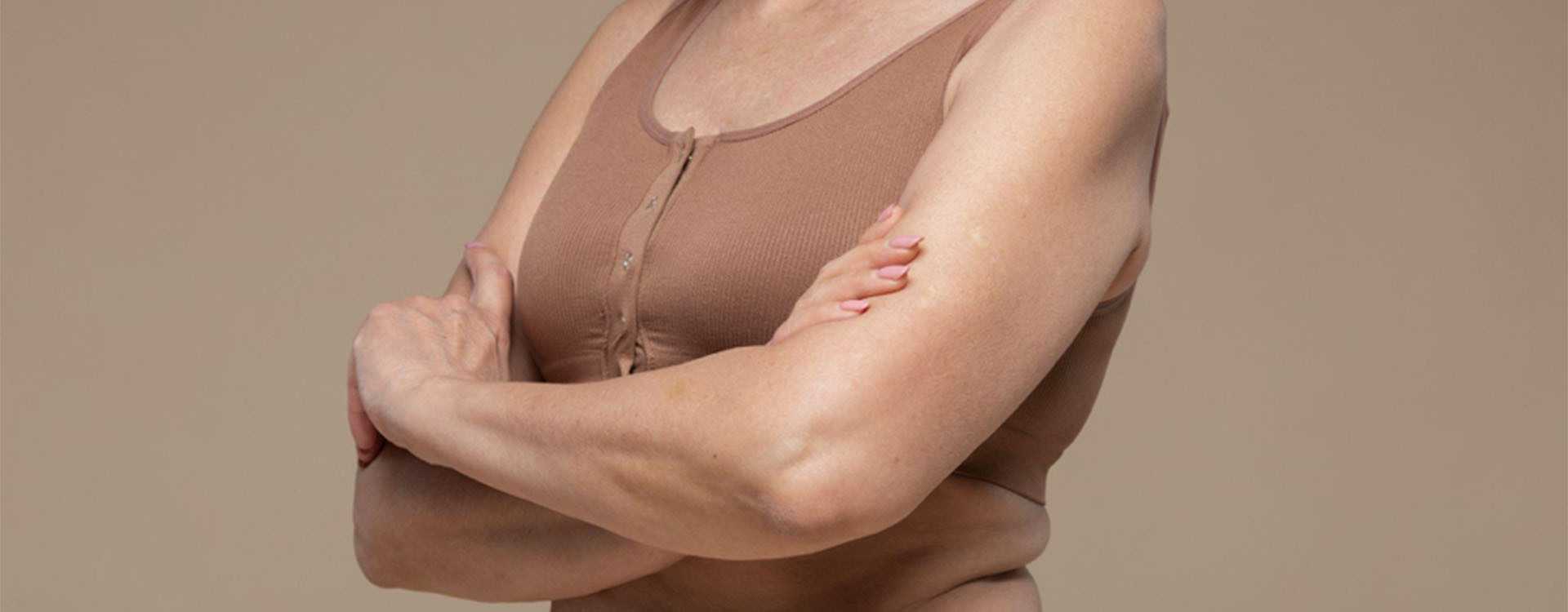
Loss of skin tone can occur anywhere: on the face (sagging cheeks, less defined contours), the neck, the abdomen, the inner thighs, and/or the arms.

Even though it’s a natural process, it can significantly affect appearance and self-perception. That’s why it’s important to act early—don’t wait until the damage becomes too visible.

What does “elastic skin” mean?

What does it mean to have elastic skin

Let’s start from the beginning. When we say skin is elastic, we mean it can stretch and quickly return to its original shape.

Imagine a new rubber band: you stretch it and it instantly snaps back. Skin should work more or less the same way.

This is all thanks to two key proteins: collagen and elastin. The first provides structure and strength, the second adds flexibility.

Together, they make the skin compact yet dynamic, able to adapt to movement, weight changes, and aging.

The problem arises when these proteins begin to decrease. The result? Thinner skin, less responsive, more prone to sagging and wrinkles.

Let’s look at how to support it.

What makes skin more elastic?

If you think skin elasticity depends only on genetics, good news: there are many ways to improve it.

Sure, genes play their part, but lifestyle makes the real difference.

Elastic skin starts with a healthy body.

Good sleep allows skin to regenerate, while a diet rich in nutrients helps produce new collagen.

Hydration, both internal and external, is essential: dry skin loses tone much more quickly.

Physical activity also plays a crucial role—movement stimulates circulation, allowing the skin to receive more oxygen and nutrients.

Watch out for the sun: UV rays are among the main enemies of elasticity; protecting yourself— even in winter— is a powerful anti-aging habit.

Let’s move on to practical advice.

How to really make skin more elastic

What can you do starting today to make your skin more elastic and firm?

Begin with a proper body routine: face and body need external support with specific products.

The hydrating and nourishing body cream by The Unique Form, thanks to Glyceryl Glucoside, instantly improves skin hydration, making it more supple and nourished.

But don’t stop at cosmetics: real change starts from within with the right supplementation.

Eat foods rich in omega-3s, like salmon and walnuts, and don’t skip seasonal fruits and vegetables packed with antioxidants.

Don’t forget to drink water!

In short, taking care of your skin isn’t just about creams—it’s about habits.

The best vitamins for skin elasticity

If your skin could write a vitamin shopping list, first on the list would be: vitamin C.

This vitamin is essential for collagen production, helps the skin heal, and keeps it firm.

You’ll find it in citrus fruits, kiwis, bell peppers, broccoli, and also in supplements like Antiox Vitam Day and Aloe Day Più (try it in green apple, mango & papaya, and lemon flavors).

Then there’s vitamin A, also known as retinol, which supports cell regeneration and improves skin texture.

Vitamin E is also essential: it has powerful antioxidant effects, fighting the free radicals that destroy collagen and elastin.

Finally, don’t forget the B vitamins, which support skin metabolism and help your skin stay healthy, radiant, and resilient.

Focus on the abdomen: how to keep belly skin elastic

If there’s one area where skin elasticity is put to the test more than any other, it’s the abdomen.

Pregnancies, diets, lack of physical activity—everything shows up on the belly.

Here too, the winning combination is: physical exercise + targeted treatments + patience.

Core-focused exercises (planks, crunches, pilates) help tone the muscles, which in turn “lift” the skin.

Firming creams or reshaping serums, applied with a good massage, improve microcirculation.

In short, a firm abdomen isn’t a fantasy—but it does require consistency.

Most importantly, remember this: it’s never too late to start. Even if your skin isn’t at its best today, you can still improve it, tone it, make it brighter, and more elastic!